
Understanding Closing Costs: What Buyers and Sellers Should Expect
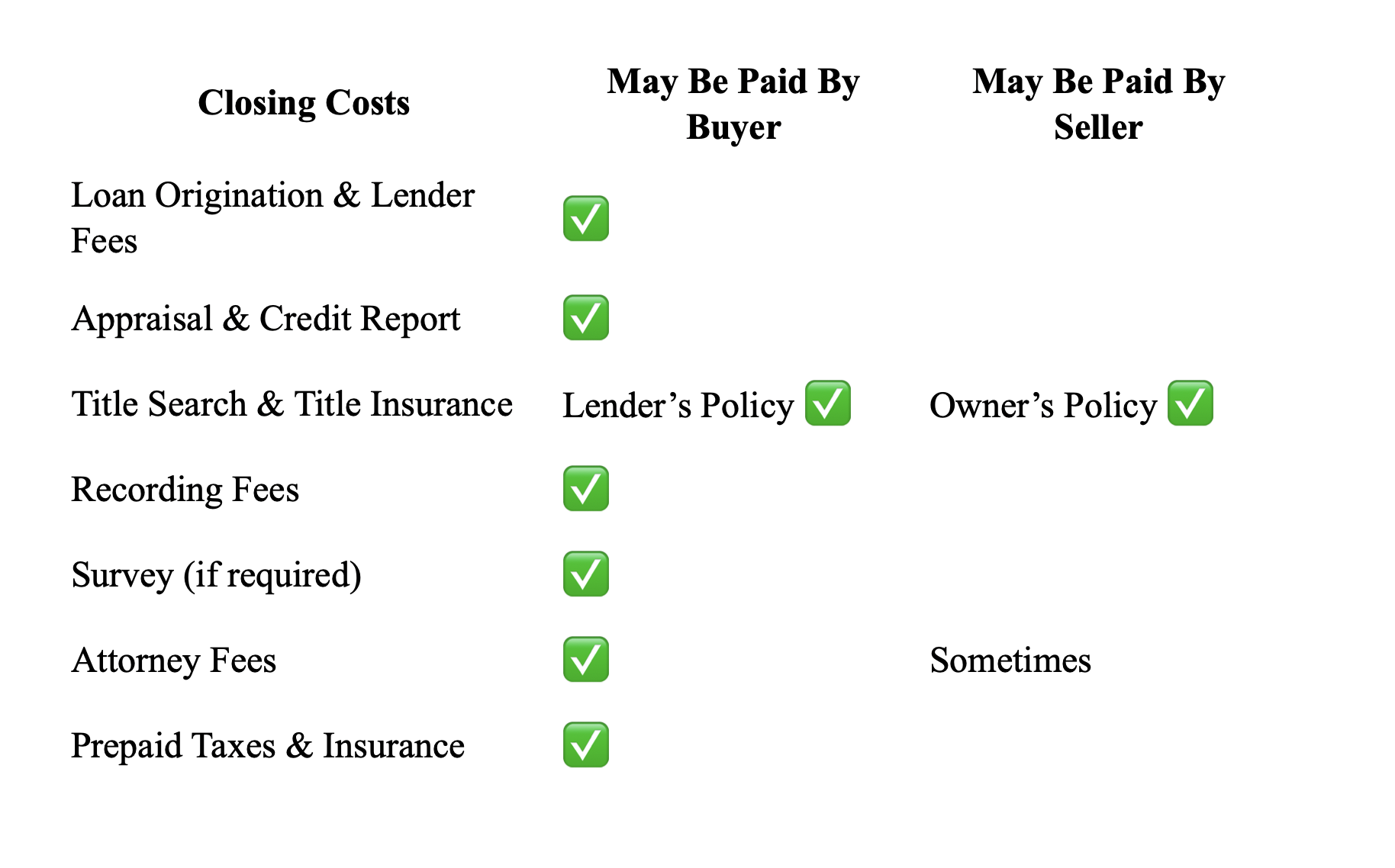
Closing costs are the fees and expenses that come with finalizing a real estate transaction. Who pays which costs depends on the contract terms, local custom, and negotiation between buyer and seller. Below is a general overview of common fees and how they’re typically handled, though each deal may differ.
Buyer’s Closing Costs
Loan Origination & Lender Fees – For processing the mortgage.
Appraisal & Credit Report – Required by the lender.
Title Search & Title Insurance (lender’s policy) – Protects the lender’s interest.
Recording Fees – To record the deed and mortgage with the county.
Survey Fee – If required.
Attorney Fees – Depending on the state or if chosen by the buyer.
Prepaid Items – Taxes, insurance, and prepaid interest.
Portion of Escrow/Settlement Fees – Shared or negotiated.
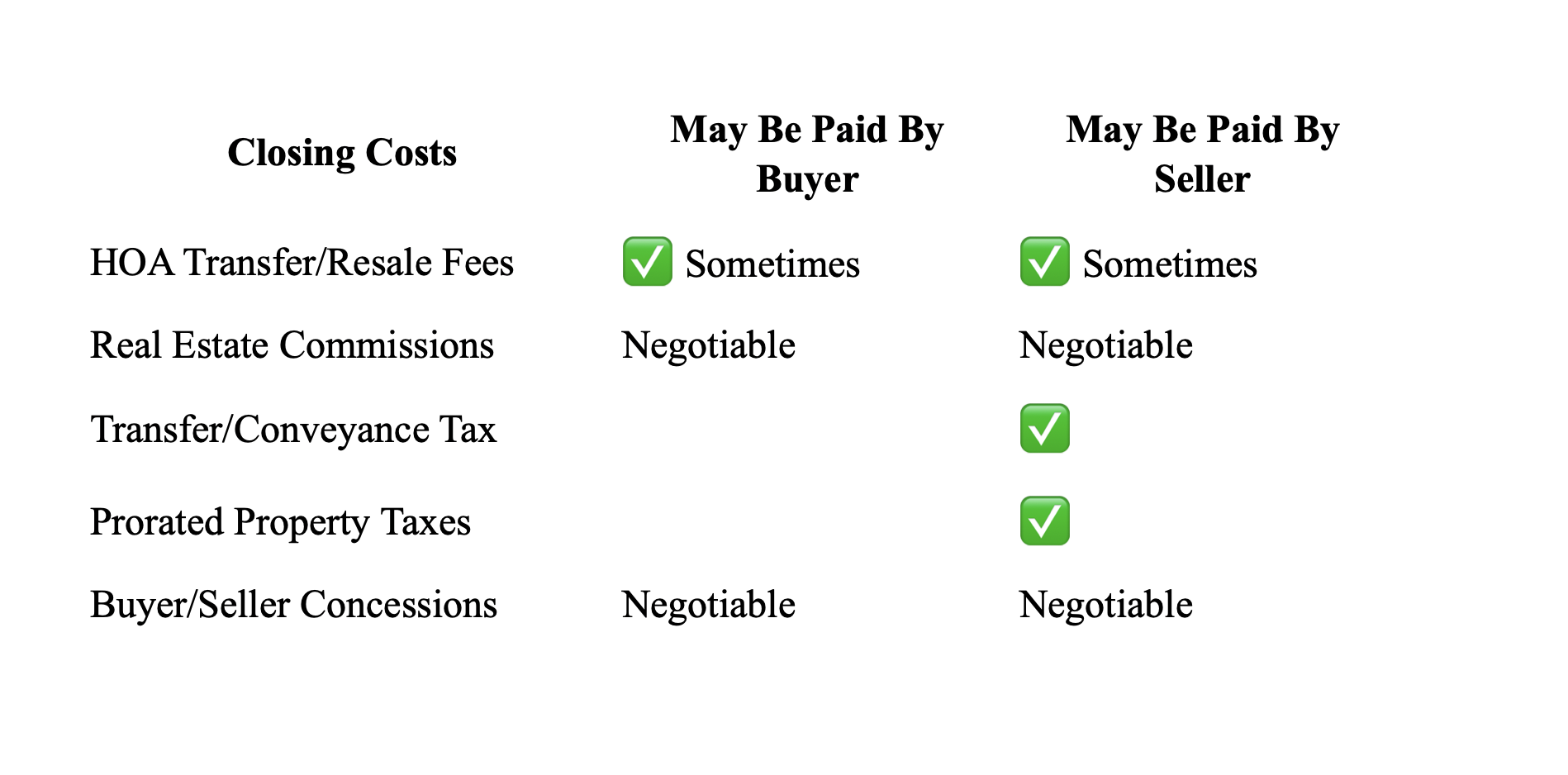
Real Estate Commissions – Compensation for agents is negotiable and determined in the listing/buyer agreements and purchase contract.
Seller’s Closing Costs
Real Estate Commissions – Compensation for agents is negotiable and determined in the listing/buyer agreements and purchase contract.
Title Search & Owner’s Title Insurance – In Ohio and many other states, sellers often provide the owner’s policy, but this can vary.
Transfer / Conveyance Tax –
Montgomery County Conveyance Fee: $3 per $1,000 of the sale price.
Conveyance Fee varies slightly based on the county.
Deed Preparation – Preparing and recording the deed.
Portion of Escrow/Settlement Fees – Shared or negotiated.
Prorated Property Taxes – Seller typically pays up to the day of closing.
HOA Resale/Transfer Fees – If applicable.
Buyer Credits / Concessions – If agreed upon in the contract.
Side-by-Side Comparison (General Overview)
✅ Key Takeaway: Closing costs vary by transaction. All fees are outlined in the closing disclosure from the title office.
